If you’ve been hearing about red light therapy lately, at gyms, recovery studios, dermatology offices, and now massage practices, you’re seeing a real shift in how mainstream wellness treats pain and recovery. Once considered fringe, red light therapy (also called photobiomodulation or low-level laser therapy) is now backed by a growing body of research and FDA-cleared devices for specific pain and inflammation indications. The question is: does it actually work, and is it worth adding to your pain relief routine?
In this guide, we’ll walk through what red light therapy actually is, how it works at the cellular level, what the research says, what conditions it can help, and how we use it at Inspire Movements in Briargate, Colorado Springs. We typically use it as an add-on to ashiatsu massage and cupping for deeper, longer-lasting recovery.
- 1 What You’ll Learn in This Guide
- 1. What Is Red Light Therapy?
- 2. How Red Light Therapy Works
- 2.1 Mitochondrial Stimulation
- 2.2 Reduced Inflammation
- 2.3 Improved Microcirculation
- 2.4 Tissue Repair and Recovery
- 2.5 Pain Modulation
- 3. What the Research Says
- 4. What Conditions Can Red Light Therapy Help?
- 4.1 Chronic Low Back Pain
- 4.2 Joint Pain and Arthritis
- 4.3 Post-Workout Muscle Soreness
- 4.4 Sports Injuries and Strains
- 4.5 Chronic Inflammation
- 4.6 Stiffness and Limited Range of Motion
- 4.7 Recovery Between Massage Sessions
- 4.8 Ready to Experience Red Light Therapy?
- 5. Why Combine Red Light Therapy With Massage?
- 6. What to Expect During a Red Light Therapy Session
- 6.1 Setup and Positioning
- 6.2 During the Session
- 6.3 After the Session
- 6.4 Frequency for Best Results
- 7. Red Light Therapy vs. Other Recovery Methods
- 8. Who Should Avoid Red Light Therapy?
- 9. How Often Should You Get Red Light Therapy?
- 10. Common Questions About Red Light Therapy
- 10.1 Is red light therapy the same as a tanning bed?
- 10.2 Will I feel anything during the session?
- 10.3 How long until I notice results?
- 10.4 Can I overdo red light therapy?
- 10.5 Are at-home red light devices as effective as professional ones?
- 11. Experience Red Light Therapy in Briargate, Colorado Springs
- 11.1 Ready to Try Red Light Therapy?
What You’ll Learn in This Guide
- What red light therapy is and how it works at the cellular level
- The difference between red light, near-infrared, and other wavelengths
- What the research says about pain relief and recovery
- Conditions red light therapy can help with
- Why we combine red light therapy with massage and cupping
- What to expect during a red light therapy session
- Who should and shouldn’t use red light therapy
What Is Red Light Therapy?
Red light therapy is a non-invasive treatment that uses specific wavelengths of red and near-infrared light to penetrate the skin and stimulate cellular activity. You may also see it called photobiomodulation (PBM), low-level laser therapy (LLLT), or low-level light therapy. They all refer to essentially the same thing: using light at therapeutic wavelengths to promote healing, reduce inflammation, and support pain relief.
The wavelengths typically used in clinical and wellness practice fall in two main ranges:
- Red light (630-700 nm): Penetrates the skin a few millimeters, ideal for surface tissue, skin health, and superficial muscles
- Near-infrared light (700-1100 nm): Penetrates deeper into tissue, reaching muscles, joints, and even bone. It’s best for deeper musculoskeletal pain and recovery
Most modern therapy devices, including the one we use at Inspire Movements, combine both red and near-infrared wavelengths to provide comprehensive coverage of both surface and deep tissues.
How Red Light Therapy Works
The mechanism behind red light therapy is fascinating, and it actually has a solid biological foundation. Here’s what’s happening at the cellular level:
Mitochondrial Stimulation
Your cells contain mitochondria, tiny structures that produce ATP, the molecular fuel your body runs on. When red and near-infrared light penetrates tissue, it’s absorbed by a specific enzyme in the mitochondria called cytochrome c oxidase. This absorption increases ATP production, which essentially gives your cells more energy to repair and function.
Reduced Inflammation
Research published in PubMed shows that photobiomodulation reduces the release of pro-inflammatory cytokines like IL-1β, IL-6, and TNF-α. In simpler terms, it dampens the inflammatory cascade that drives much of chronic pain. This is why many clients report reduced soreness and faster recovery after red light therapy sessions.
Improved Microcirculation
Red light exposure has been shown to improve blood flow at the capillary level, which means more oxygen and nutrients reach injured or chronically tense tissues. This improved circulation also accelerates the removal of metabolic waste products that contribute to muscle fatigue and pain.
Tissue Repair and Recovery
By boosting cellular energy production and reducing inflammation, red light therapy supports faster tissue repair. This is especially valuable after deep tissue massage, cupping, or athletic activity, when tissues need to recover and rebuild.
Pain Modulation
Research has identified that red light therapy can directly affect pain pathways at both peripheral (in the tissues) and central (in the spinal cord and brain) levels. A 2021 review in PubMed found that cutaneous application of red light reduces pain in conditions like neuropathies and complex regional pain syndrome.
What the Research Says
Red light therapy has accumulated more research support than many people realize. According to UCLA Health, photobiomodulation has shown significant short-term health benefits with few adverse effects. The FDA has cleared multiple red light therapy devices for specific indications, including temporary relief of minor muscle and joint pain, arthritis pain, and improved circulation.
Key findings from peer-reviewed research:
- Pain reduction: A 2023 literature review on photobiomodulation found that PBM is beneficial for both acute and chronic pain, with most reviewed studies showing positive outcomes
- Inflammation: Studies consistently show reduced inflammatory markers after PBM treatment
- Tissue healing: Research demonstrates accelerated wound and tissue recovery with appropriate dosing
- Muscle recovery: Athletes using red light therapy often show reduced post-exercise soreness and faster return to performance
- Joint pain: Multiple studies support red light’s effectiveness for arthritis-related pain
It’s worth being clear: red light therapy isn’t a cure-all, and not every claim made about it is well-supported by research. UCLA Health notes that while red light therapy shows promise for pain and inflammation, in many cases the chronic pain returned within weeks of ending therapy, meaning consistent use over time matters more than one-off sessions.
The good news is that red light therapy is among the safest interventions available. The risks are minimal, the side effects are rare, and unlike UV light, red light therapy does not increase cancer risk. For deeper context on how we use red light therapy in our practice, see our piece on the healing power of red light therapy for low back pain relief.
What Conditions Can Red Light Therapy Help?
At Inspire Movements, we use red light therapy primarily for pain relief and recovery, though it has applications across many conditions. Here are the situations where we see it help most:
Chronic Low Back Pain
Red light therapy is one of our favorite add-ons for clients with chronic low back pain. The deeper-penetrating near-infrared wavelengths reach the lumbar muscles and surrounding tissues, reducing inflammation and accelerating recovery between massage sessions. Combined with ashiatsu, it can extend the relief from a single session significantly.
Joint Pain and Arthritis
FDA-cleared devices have been validated for temporary relief of arthritis-related pain. Red light therapy doesn’t reverse joint damage, but it can reduce the inflammation that drives day-to-day pain, particularly helpful for clients dealing with knee, shoulder, or wrist arthritis.
Post-Workout Muscle Soreness
For active clients in Colorado Springs, like runners on the Front Range, cyclists, weekend hikers, and gym-goers, red light therapy is a powerful recovery tool. By reducing inflammation and supporting tissue repair, it helps clients bounce back faster between training sessions.
Sports Injuries and Strains
When tissues need to heal, whether from a strain, sprain, or overuse injury, red light therapy supports the cellular repair process. It’s not a replacement for proper medical care for serious injuries, but it accelerates recovery for the everyday strains and overuse issues most active people deal with.
Chronic Inflammation
For clients dealing with chronic, low-grade inflammation that contributes to ongoing pain or stiffness, regular red light therapy can help calm the inflammatory response over time. This is particularly valuable for people who haven’t responded well to traditional anti-inflammatory medications.
Stiffness and Limited Range of Motion
By improving circulation and reducing inflammation, red light therapy can help loosen stiff tissues and improve joint mobility, especially when combined with hands-on bodywork that mechanically addresses the restriction.
Recovery Between Massage Sessions
One of our most common uses: clients add red light therapy to their massage sessions to extend the recovery window. The work done on the table goes deeper, lasts longer, and the body feels better in the days following. For more on combined approaches, see the benefits of red light therapy for wellness in Colorado Springs.
Ready to Experience Red Light Therapy?
Book a session with Jessica at Inspire Movements and add red light therapy to your massage.
Why Combine Red Light Therapy With Massage?
At Inspire Movements, we rarely use red light therapy as a standalone treatment. The reason is straightforward: it works exceptionally well as an amplifier for hands-on bodywork rather than a replacement for it.
Here’s how each modality complements the others:
- Ashiatsu massage mechanically releases muscle tension and breaks up adhesions through deep, sustained pressure
- Cupping therapy decompresses tissue and releases fascial restrictions through suction
- Red light therapy works at the cellular level to reduce inflammation and accelerate tissue repair after the mechanical work is done
Used together, you address tissue dysfunction from all three angles: mechanical (compression and decompression) plus biochemical (cellular repair). This is why our combined sessions consistently produce better, longer-lasting results than any single modality alone.
For an in-depth example of how this combined approach works, see our piece on why combined ashiatsu and cupping works better for low back pain. The same principle applies when red light therapy is added to the mix. The whole becomes more effective than the sum of the parts.
What to Expect During a Red Light Therapy Session
If you’ve never experienced red light therapy, here’s what a session typically looks like:
Setup and Positioning
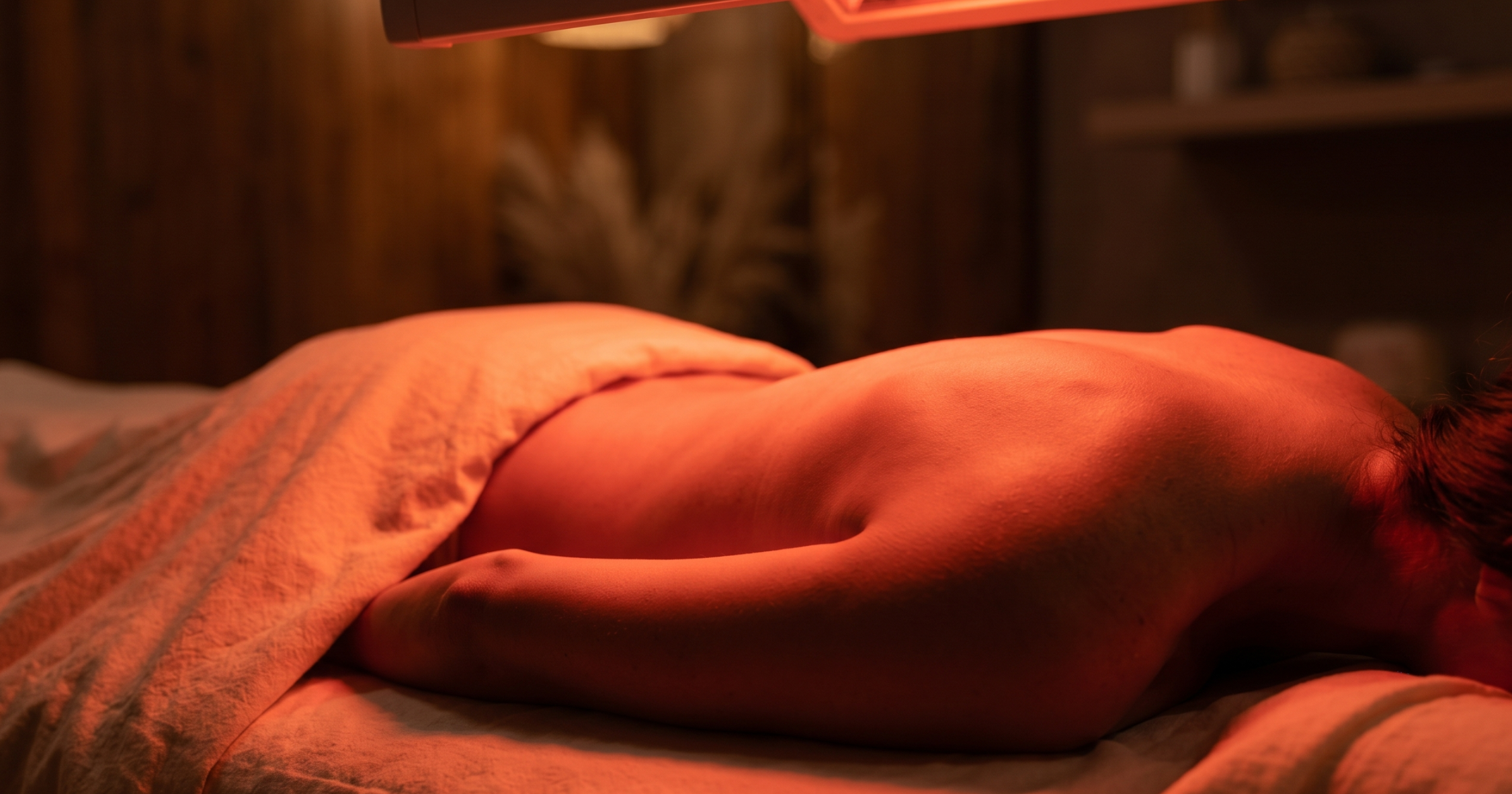
You’ll either lie on the massage table or sit comfortably while the red light device is positioned over the treatment area. The device may be a flat panel, a flexible pad, or a handheld unit depending on the area being treated. Most setups don’t require you to undress beyond what you would for a massage. Light penetrates clothing for many applications, though direct skin exposure provides the most efficient delivery.
During the Session
A typical red light therapy session lasts 10-20 minutes per area. You’ll feel a gentle warmth, but no significant heat or discomfort. There’s no sensation of intensity. Many clients are surprised that something so gentle can have such measurable effects. Eye protection (provided) is used during sessions to protect against direct exposure to the light.
After the Session
Most clients feel relaxed and notice a subtle warmth or sense of calm in the treated area. Unlike massage, you won’t feel dramatically different immediately. The benefits build over hours and days as cellular processes accelerate. Many clients report feeling notably better the day after their session, particularly when red light is combined with massage.
Frequency for Best Results
Like most therapeutic modalities, red light therapy works best with consistent use rather than one-off sessions. Most clients see the best results with 2-3 sessions per week initially, then taper to weekly or bi-weekly maintenance once they’ve achieved their goals.
Red Light Therapy vs. Other Recovery Methods
If you’re trying to decide how red light therapy fits with other recovery tools, here’s a quick comparison:
| Method | How It Works | Best For | Time Required |
|---|---|---|---|
| Red Light Therapy | Cellular stimulation | Inflammation, recovery, joint pain | 10-20 min |
| Ice / Cold Therapy | Vasoconstriction | Acute injuries, swelling | 15-20 min |
| Heat Therapy | Vasodilation | Stiffness, chronic tension | 15-30 min |
| Massage | Mechanical pressure | Muscle tension, fascial work | 60-120 min |
| Stretching | Muscle elongation | Flexibility, mobility | 10-30 min |
The reality is that these tools aren’t competitors. They’re complements. Red light therapy doesn’t replace massage or stretching, just like ice doesn’t replace heat. The best recovery routines use multiple tools strategically based on what your body needs at any given moment.
Who Should Avoid Red Light Therapy?
Red light therapy is among the safest therapeutic modalities available, but it’s not appropriate for everyone. Avoid or consult with your doctor before using red light therapy if you have:
- Photosensitivity from medications (some antibiotics, retinoids, certain anti-inflammatories)
- Active cancer or history of skin cancer (consult your oncologist first)
- Severe eye conditions (always use eye protection during treatment)
- Pregnancy (insufficient research; consult your provider)
- Active skin conditions (lupus, certain autoimmune skin disorders)
- Recent steroid injections in the treatment area (timing matters; ask your doctor)
- Implanted electronic devices in the treatment area (rare but worth mentioning)
If any of these apply, mention them during your intake conversation. We can adjust treatment, recommend an alternative modality, or suggest you consult with your physician first.
How Often Should You Get Red Light Therapy?
Frequency depends on your goals. Here’s how we typically structure red light therapy into a care plan:
| Goal | Recommended Frequency | Typical Format |
|---|---|---|
| Acute pain or injury | 2-3x per week for 2-4 weeks | Standalone or with massage |
| Chronic pain | Weekly add-on to massage | 15-20 min add-on |
| Athletic recovery | After hard training sessions | 15-20 min targeted |
| Maintenance | Bi-weekly to monthly | Add-on to massage |
| First-time client | Single session to assess response | 10-15 min added to massage |
Common Questions About Red Light Therapy
Is red light therapy the same as a tanning bed?
No. Tanning beds use ultraviolet (UV) light, which damages skin cells and increases cancer risk. Red light therapy uses red and near-infrared wavelengths that don’t cause skin damage and have been shown to actually support skin health.
Will I feel anything during the session?
You’ll feel a gentle warmth, but nothing intense. Many clients are surprised at how subtle the sensation is. The benefits work at the cellular level and aren’t tied to any dramatic feeling during treatment.
How long until I notice results?
Most clients notice improvements within 2-4 sessions, though for chronic conditions it can take 6-8 sessions before results become significant. Cumulative effect matters. Single sessions help, but consistency is what produces lasting change.
Can I overdo red light therapy?
Research suggests there’s a sweet spot for dosage: too little doesn’t produce effects, but too much may also be less effective. Sessions at our practice are timed to fall within the therapeutic range, so you don’t have to worry about overdoing it during a guided session.
Are at-home red light devices as effective as professional ones?
It depends on the device. FDA-cleared at-home devices can be effective for surface-level applications, but professional clinical devices typically use more powerful wavelengths and broader coverage that produce results faster. For chronic pain or recovery from injuries, professional treatment is usually more efficient.
Experience Red Light Therapy in Briargate, Colorado Springs
Red light therapy is one of the most versatile recovery tools we offer at Inspire Movements. Whether you’re managing chronic pain, recovering from athletic activity, dealing with arthritis, or simply looking to extend the benefits of your massage sessions, red light therapy provides a gentle, low-risk, evidence-supported option that complements hands-on bodywork beautifully.
We serve clients throughout Briargate, Research Parkway, Academy Boulevard, and the I-25 corridor in Colorado Springs. Jessica’s training in integrative pain therapy means red light therapy is integrated thoughtfully into your overall care plan, not just bolted on as an upsell. Every session is designed around what your body actually needs.
If you’ve been curious about red light therapy or want to amplify the results of your massage work, we’d love to introduce you to it.
Ready to Try Red Light Therapy?
Book a session with Jessica at Inspire Movements and add red light therapy to your massage for amplified pain relief and faster recovery. Located in Briargate, Colorado Springs.