Winter in Colorado Springs brings beautiful snowy mornings, ski weekends in the mountains, and a full holiday calendar. It also brings a familiar wave of stiff necks, tight shoulders, and aching lower backs. If your back and neck seem to complain more once the temperature drops, you are not imagining it. Winter changes how we move, how we sit, and how much load we put on our bodies.
In this guide, we will walk through the most common reasons back and neck pain flare up in winter, practical ways to protect yourself, and how massage can help you stay loose and comfortable through the season. At Inspire Movements in Colorado Springs, winter is when many clients come to us for low back pain therapy and neck and shoulder relief.
What You’ll Learn in This Guide
- Why back and neck pain tend to flare in winter
- What the research says about snow shoveling injuries
- How to shovel, travel, and ski without wrecking your back
- How massage helps winter aches
- When back or neck pain needs a doctor
- 1. Why Back and Neck Pain Flare Up in Winter
- 2. Snow Shoveling: The Biggest Winter Back Risk
- 3. Ski Season, Travel, and the Holiday Rush
- 4. How Massage Helps Winter Back and Neck Pain
- 5. Simple Habits to Protect Your Back This Winter
- 6. When to See a Doctor
- 7. Frequently Asked Questions
- 7.1 Why does my back hurt more in the winter?
- 7.2 Can cold weather cause neck pain?
- 7.3 Should I get a massage after hurting my back shoveling?
- 7.4 How often should I get a massage in the winter?
- 8. Winter Back and Neck Pain Relief in Colorado Springs
Why Back and Neck Pain Flare Up in Winter
There is rarely one single cause. Winter tends to stack several stressors on your body at once:
- Bracing against the cold. Hunching your shoulders up toward your ears on a cold walk or at a chilly bus stop keeps your neck and upper back muscles working long after you are back inside.
- Moving less, sitting more. Shorter days and icy sidewalks mean fewer walks and more hours on the couch or at a desk. Our post on reversing sitting disease explains why that adds up for your lower back.
- Sudden heavy work. Going from a sedentary week straight to shoveling a heavy, wet Colorado snowfall is a classic recipe for strain.
- Slips on ice. Even a fall you “catch” can wrench your back and neck as your body reacts to stop it.
- Holiday travel and stress. Long drives, cramped flights, lifting luggage, and a packed schedule all feed tension in the neck, shoulders, and back.
Snow Shoveling: The Biggest Winter Back Risk
Shoveling deserves its own section. A national study published in the American Journal of Emergency Medicine (indexed on PubMed) looked at snow shovel-related injuries treated in U.S. emergency departments from 1990 to 2006. It found an average of about 11,500 emergency visits per year. The lower back was the most commonly injured body region (34.3% of cases), and acute musculoskeletal exertion, essentially overdoing it, was the most common cause (53.9%). Slips and falls made up another 20%.
| Shoveling Habit | Back-Friendly Alternative |
|---|---|
| Heading out cold and stiff | Warm up for a few minutes first with a short walk and gentle movement |
| Lifting full, heavy scoops | Push snow when you can, and lift smaller loads |
| Bending at the waist | Bend your knees and hips, keep the load close to your body |
| Twisting to toss snow over your shoulder | Turn your whole body with your feet, then dump the snow in front of you |
| Clearing the whole driveway at once | Take breaks, and shovel in stages during a long storm |
One important safety note: the same study found that cardiac-related emergencies made up a small share of shoveling cases but accounted for all of the deaths. If you have a heart condition or are not used to strenuous activity, talk with your doctor before shoveling heavy snow.
Ski Season, Travel, and the Holiday Rush
Colorado winters are active. Skiing and snowboarding demand a lot from your legs, hips, and lower back, and the long drive up and back can leave you stiffer than the slopes did. Warming up before your first run and stretching after your last can help. If you train or play hard in the cold months, our guide to massage for athletes covers how bodywork fits into recovery.
Holiday travel brings its own strain. Break up long drives with stops to stand and stretch, lift luggage with your legs instead of your back, and use a small pillow or rolled jacket to support your lower back in the car or on the plane. And keep an eye on the phone posture that creeps in during long trips, which we cover in our post on text neck.
Feeling Winter in Your Back and Neck?
Book a session at Inspire Movements and work out the tension before it settles in for the season. Located in Briargate, Colorado Springs.
How Massage Helps Winter Back and Neck Pain
Massage targets the muscle tension that builds up from cold-weather bracing, extra sitting, and sudden heavy work. Depending on where you are feeling it, we can focus on:
- The neck and upper shoulders, where hunching against the cold tends to lock in
- The upper and mid back, which takes a beating from shoveling and lifting
- The lower back and hips, which tighten with long hours of sitting and travel
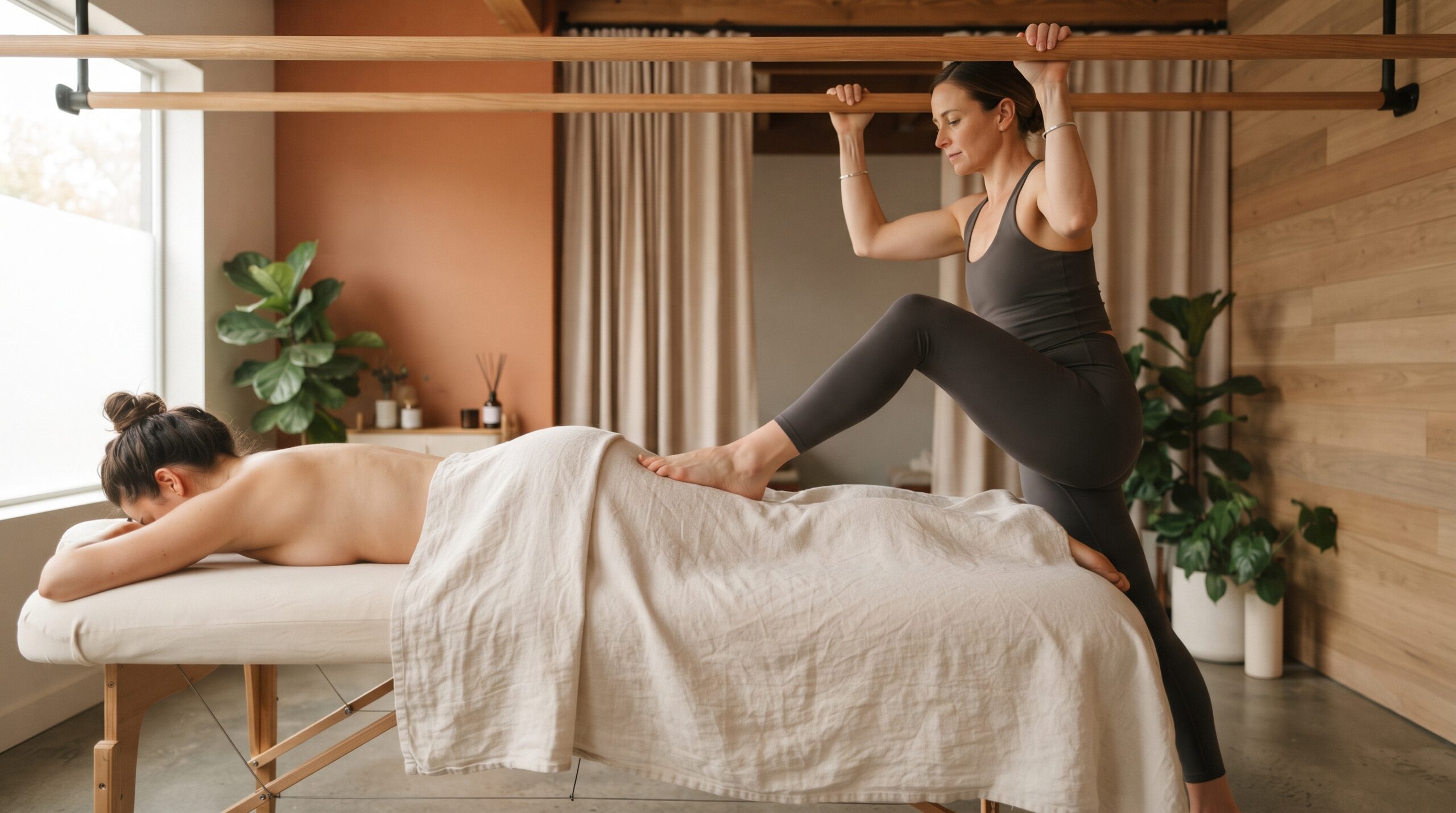
For deep, broad pressure through the back and hips, ashiatsu barefoot massage is a client favorite. For stubborn knots in the shoulders and upper back, cupping can be a helpful addition, and red light therapy is a gentle way to support recovery after a hard day on the slopes or the shovel.
A fair word on the evidence: according to the National Center for Complementary and Integrative Health (NCCIH), massage may be helpful for neck pain, though the benefits may be short-term, and the evidence for low-back pain is still limited. That is one reason we see massage as part of a routine, alongside movement, good habits, and care from your doctor when needed, rather than a one-time fix.
Simple Habits to Protect Your Back This Winter
- Keep moving. Short indoor walks, stretching breaks, or a few minutes of gentle movement every hour help counter extra sitting.
- Dress for warmth at the neck. A scarf or high collar makes it easier to relax your shoulders outside.
- Wear shoes with good grip and take shorter steps on icy sidewalks and parking lots.
- Warm up before effort, whether it is shoveling, skiing, or carrying holiday boxes down from the attic.
- Watch your stress. Holiday pressure often shows up as tight shoulders and even jaw-related headaches, which we cover in our post on TMJ headaches.
When to See a Doctor
Most winter aches are muscular and ease with time, movement, and care. See a doctor if your pain follows a fall or hard impact, does not improve after a week or two, or keeps you up at night. Seek medical care right away for back or neck pain with numbness, tingling, or weakness in your arms or legs, loss of bladder or bowel control, fever, or chest pain or shortness of breath during or after shoveling.
Frequently Asked Questions
Why does my back hurt more in the winter?
Winter usually combines less movement, more sitting, bracing against the cold, and bursts of heavy work like shoveling. Together, those put extra strain on the muscles of the back and neck.
Can cold weather cause neck pain?
Many people tense and hunch their shoulders in the cold, which keeps the neck and upper back muscles working and can leave them stiff and sore. Staying warm at the neck and taking movement breaks can help.
Should I get a massage after hurting my back shoveling?
For ordinary muscle soreness, massage can help once the initial flare settles. If the pain came from a fall, is severe, or comes with numbness or weakness, see a doctor first.
How often should I get a massage in the winter?
It depends on your activity level and how your body is responding. Many active clients find that regular sessions through the winter help them stay ahead of tension instead of chasing it.
Winter Back and Neck Pain Relief in Colorado Springs
Whether it is a heavy snowfall, a long holiday drive, or a full ski season, winter asks a lot of your back and neck. At Inspire Movements, we help clients throughout Briargate, Research Parkway, and the greater Colorado Springs area stay loose and comfortable all season. Learn more about our back pain massage in Colorado Springs, or book a session and let us help.
Ready to Feel Better This Winter?
Book your session at Inspire Movements today. Located in Briargate, Colorado Springs.