If you’ve been dealing with low back pain for more than three months, you’re not alone. Back pain is one of the most common health complaints in the United States, and chronic low back pain is one of the leading reasons people in Colorado Springs seek out massage therapy. Whether your pain comes from long hours at a desk, a previous injury, years of physical work, or stress that just won’t quit, the good news is that the right kind of massage therapy can offer real, lasting relief.
According to the Centers for Disease Control and Prevention, 39% of U.S. adults experienced back pain in the past three months, and the prevalence increases with age. In this guide, we’ll walk through what chronic low back pain actually is, what causes it, the symptoms to watch for, what the research says about massage as a treatment option, and how the targeted therapies at Inspire Movements in Briargate can help you feel better and stay better.
- 1 What You’ll Learn in This Guide
- 1. What Is Chronic Low Back Pain?
- 2. Common Causes of Chronic Low Back Pain
- 2.1 1. Prolonged Sitting and Desk Work
- 2.2 2. Muscle Imbalances and Tightness
- 2.3 3. Old Injuries That Never Fully Healed
- 2.4 4. Stress and Emotional Tension
- 2.5 5. Disc Issues and Sciatica
- 2.6 6. Sedentary Lifestyle and Lack of Movement
- 2.7 7. Aging and Degenerative Changes
- 3. Symptoms to Watch For
- 3.1 Ready to Address Your Low Back Pain?
- 4. What the Research Says About Massage Therapy for Low Back Pain
- 5. How Massage Therapy Helps Chronic Low Back Pain
- 5.1 Releases Tight Muscles and Fascia
- 5.2 Improves Circulation and Reduces Inflammation
- 5.3 Calms the Nervous System
- 5.4 Restores Range of Motion
- 5.5 Addresses the Root Cause, Not Just Symptoms
- 6. Best Massage Modalities for Chronic Low Back Pain
- 6.1 Ashiatsu Massage
- 6.2 Cupping Therapy
- 6.3 Red Light Therapy
- 6.4 Tandem Massage
- 7. Why Consistency Matters More Than Intensity
- 8. What to Expect at Your First Session
- 9. Lifestyle Factors That Make Massage Work Better
- 10. Find Lasting Relief in Colorado Springs
- 10.1 Start Your Path to Lasting Relief
What You’ll Learn in This Guide
- What chronic low back pain is and how it differs from acute pain
- The most common causes of chronic low back pain
- Symptoms that signal you need professional care
- What the research says about massage therapy for low back pain
- How massage therapy provides lasting relief
- Which massage modalities work best for chronic back pain
- How often you should book sessions for the best results
What Is Chronic Low Back Pain?
Low back pain is considered chronic when it lasts longer than 12 weeks. Unlike acute back pain, which usually resolves on its own with rest and time, chronic pain tends to linger, return after temporary relief, or gradually get worse without proper treatment. The National Institute of Neurological Disorders and Stroke notes that about 80 percent of adults experience low back pain at some point in their lifetime, and back pain is the most common cause of job-related disability and a leading contributor to missed work days.
Chronic low back pain often has multiple contributing factors. Muscle tension, poor posture, repetitive strain, old injuries, sedentary lifestyles, and even chronic stress all play a role. That’s why one-size-fits-all solutions rarely work. Real relief usually comes from a combination of hands-on therapy, lifestyle adjustments, and ongoing maintenance. This is the approach we take at Inspire Movements low back pain therapy.
It’s also important to understand the distinction between specific and non-specific low back pain. Non-specific low back pain, which accounts for the vast majority of cases, has no clearly identifiable structural cause and is typically driven by muscle imbalances, fascia restrictions, and movement patterns. This is exactly the kind of pain that responds well to consistent therapeutic massage.
Common Causes of Chronic Low Back Pain
Understanding what’s causing your pain is the first step toward addressing it. Here are the most common culprits we see at our Briargate practice:
1. Prolonged Sitting and Desk Work
Sitting for 8+ hours a day shortens hip flexors, weakens the glutes, and puts constant pressure on the lumbar spine. Over time, this creates muscular imbalances that show up as nagging low back pain. If you work at a desk in Colorado Springs, whether at the Air Force Academy, downtown, or remotely from home, this is likely a major contributor. We’ve written extensively about this in our guide on why your office chair could be destroying your lower back.
2. Muscle Imbalances and Tightness
Tight hamstrings, weak core muscles, and overworked lower back muscles create a perfect storm for chronic pain. The pain you feel in your low back often originates from somewhere else entirely, like the hips, glutes, or thoracic spine. This referred pain pattern is one of the reasons stretching alone often isn’t enough. You need targeted therapy that addresses the actual source of dysfunction.
3. Old Injuries That Never Fully Healed
Sports injuries, car accidents, falls, or even childbirth can leave behind scar tissue and movement compensations that show up years later as chronic pain. Your body adapts around old injuries, but those compensations often create new problems down the line. Many of our clients are surprised to discover that pain they assumed was just “part of getting older” actually traces back to an injury from a decade or more ago.
4. Stress and Emotional Tension
Chronic stress causes muscles to stay in a constant state of low-grade contraction. The lower back, shoulders, and neck are common holding spots for emotional tension, and over time this can develop into persistent pain. The connection between stress, cortisol, and physical pain is well-documented. Read our deeper exploration of how emotional stress fuels physical pain symptoms for more.
5. Disc Issues and Sciatica
Herniated or bulging discs can press on nerves and cause radiating pain, numbness, or tingling down the leg. While massage therapy can’t fix a disc problem directly, it can significantly reduce the muscle tension and inflammation that make these conditions worse. If you’re experiencing radiating pain, our guide on ashiatsu and herniated discs walks through how we approach these cases.
6. Sedentary Lifestyle and Lack of Movement
The body is designed to move. When daily movement is limited, whether due to remote work, a desk-bound career, or recovery from an injury, muscles become deconditioned, joints lose mobility, and circulation to spinal tissues drops. This creates the perfect environment for chronic pain to set in and stay.
7. Aging and Degenerative Changes
As we age, spinal discs lose hydration, joints develop wear patterns, and muscles naturally lose some of their elasticity. While aging itself isn’t the cause of chronic pain, it does mean your body needs more consistent care to function well. Many of our clients in their 50s, 60s, and 70s find that bi-weekly massage becomes essential, not optional, for staying mobile and pain-free.
Here’s a quick reference for matching common causes to who’s most affected and the typical massage approach we recommend:
| Cause | Who’s Most Affected | Typical Approach |
|---|---|---|
| Prolonged sitting / desk work | Office workers, remote workers, drivers | Ashiatsu + hip flexor work |
| Muscle imbalances | Athletes, manual laborers, gym-goers | Targeted deep tissue + cupping |
| Old injuries | Anyone with past trauma or surgery | Ashiatsu + scar tissue work |
| Stress and emotional tension | High-stress professionals, parents, caregivers | Ashiatsu + nervous system focus |
| Disc issues / sciatica | Older adults, those with radiating pain | Gentle ashiatsu + red light therapy |
| Sedentary lifestyle | Remote workers, recovery patients | Massage + movement coaching |
| Aging / degenerative changes | Adults 50+ | Bi-weekly maintenance massage |
Symptoms to Watch For
Chronic low back pain can show up in many different ways. Here are the most common symptoms our clients describe when they first come in:
- Dull, aching pain in the lower back that won’t go away
- Stiffness in the morning or after sitting for long periods
- Sharp, shooting pain when bending, lifting, or twisting
- Pain that radiates into the hips, glutes, or down the legs
- Limited range of motion when reaching, bending, or rotating
- Muscle spasms or tightness that comes and goes
- Trouble sleeping or finding a comfortable position at night
- Pain that gets worse after exercise, work, or extended activity
- A sense of weakness or instability in the lower back area
When to see a doctor first: If your pain is accompanied by fever, unexplained weight loss, loss of bladder or bowel control, severe leg weakness, or follows a major fall or accident, see your physician before booking a massage. These can be signs of more serious conditions that need medical evaluation.
Ready to Address Your Low Back Pain?
Book a session with Jessica at Inspire Movements and start your path to lasting relief.
What the Research Says About Massage Therapy for Low Back Pain
Massage therapy isn’t just an “alternative” treatment anymore. It’s a recognized option in mainstream pain management. The National Center for Complementary and Integrative Health reports that a 2015 review of 25 studies with 3,096 participants found short-term improvements in pain after massage therapy for both acute and chronic low-back pain.
In 2017, the American College of Physicians issued clinical practice guidelines that specifically included massage therapy as an option for treating acute and subacute low back pain. This is part of a broader shift in medicine toward non-drug, non-invasive approaches as first-line treatments. This is especially relevant given the ongoing concerns about opioid use for chronic pain.
What the research is still figuring out is which types of massage work best, how often sessions should happen, and how massage compares to other interventions like physical therapy or chiropractic care. What we see in our practice is that consistency matters more than any single session, and that combining modalities (like ashiatsu plus cupping) tends to produce better outcomes than any one approach alone.
How Massage Therapy Helps Chronic Low Back Pain
Massage therapy isn’t just about feeling relaxed for an hour. The right kind of massage, applied consistently, can create real changes in how your body holds tension, moves, and recovers.
Here’s how regular therapeutic massage works to relieve chronic low back pain:
Releases Tight Muscles and Fascia
Chronic pain often comes from muscles and fascia (connective tissue) that have been locked in tension for years. Deep, sustained pressure breaks up adhesions, restores mobility, and gives those tissues a chance to heal properly. This is especially true for the deeper layers of the lower back muscles, which are difficult to reach with traditional hand-based techniques.
Improves Circulation and Reduces Inflammation
Better blood flow means more oxygen and nutrients reach the affected tissues, while waste products and inflammatory markers are flushed out. This is one of the main reasons people feel noticeably better even after a single session. The body finally gets a chance to clear out what’s been accumulating.
Calms the Nervous System
Chronic pain keeps your nervous system stuck in fight-or-flight mode, which makes everything worse. Massage activates the parasympathetic nervous system, helping your body shift into a healing state where pain signals quiet down. This is one of the most underrated benefits of consistent massage and one of the reasons it works so well alongside lifestyle changes.
Restores Range of Motion
When tight muscles release and joints can move freely again, the protective bracing pattern that fuels chronic pain starts to break down. Many of our clients are surprised at how much easier everyday movements become after a few sessions: getting out of bed in the morning, putting on shoes, picking up grandchildren, or simply turning to look behind while driving.
Addresses the Root Cause, Not Just Symptoms
Pain medication and quick fixes only mask symptoms. Skilled massage therapy works on the underlying tissue dysfunction, postural patterns, and movement compensations that keep chronic pain alive. This is the difference between getting relief that lasts a few hours and relief that lasts weeks or longer.
Best Massage Modalities for Chronic Low Back Pain
Not all massage is created equal. For chronic low back pain, these are the modalities we use most often at Inspire Movements:
Ashiatsu Massage
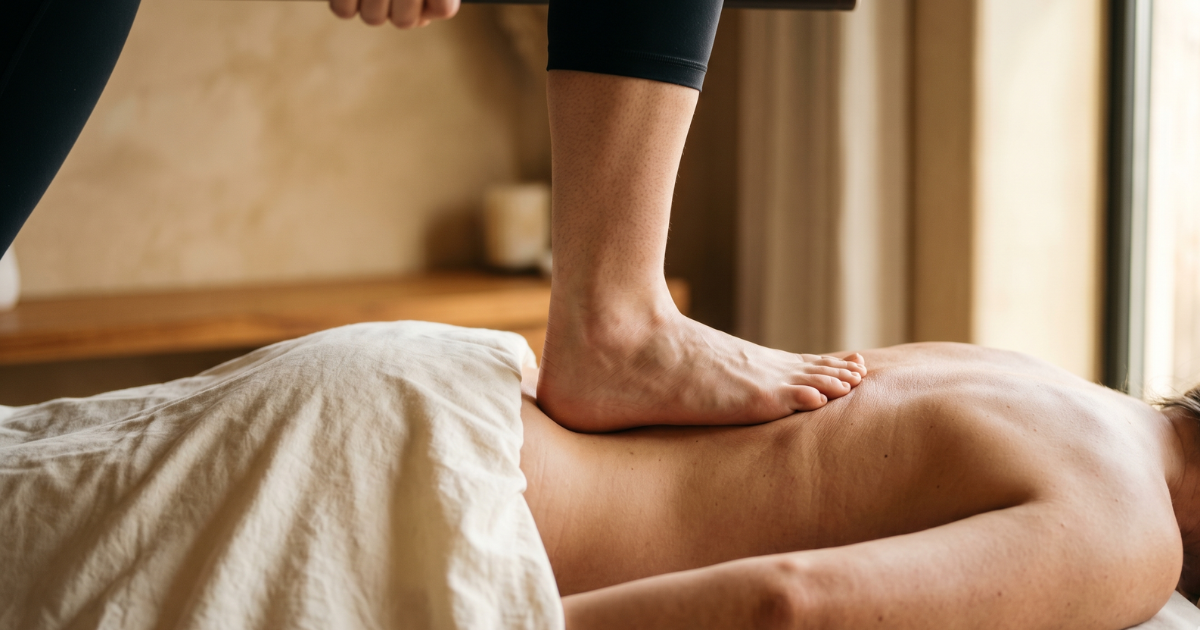
Often called the “gold standard” for chronic low back pain, ashiatsu uses controlled foot pressure to deliver deep, broad strokes that reach the deeper layers of muscle without the sharp discomfort of elbow or thumb work. The barefoot technique allows for sustained, even pressure that’s especially effective for thick, tight back muscles that don’t respond to traditional deep tissue. Many of our clients describe ashiatsu as “deeper than deep tissue, but somehow more relaxing.”
Cupping Therapy
Cupping creates negative pressure that lifts tissue, increases circulation, and breaks up adhesions in a way hands-on massage can’t. Many clients combine cupping with ashiatsu for amplified relief, especially when chronic pain has been around for years. We’ve seen this combination produce results that neither approach delivers on its own. See our breakdown on why combined ashiatsu and cupping works better for the full picture.
Red Light Therapy
Red light therapy supports tissue healing at the cellular level, reducing inflammation and accelerating recovery between massage sessions. It pairs well with hands-on therapy as part of a comprehensive pain relief plan, particularly for clients dealing with deep-set chronic inflammation. Read more about the healing power of red light therapy for low back pain relief.
Tandem Massage
For complex or particularly stubborn cases, tandem massage offers two therapists working together in coordinated rhythm. It’s especially useful when chronic pain involves multiple body regions or when you want maximum results in a single session. Most clients book this when they want to accelerate progress in their first few visits.
Not sure which modality is right for you? Here’s a quick comparison to help you choose:
| Modality | Best For | Pressure Level | Session Length |
|---|---|---|---|
| Ashiatsu | Deep, broad chronic tension | Deep but sustained | 60-120 min |
| Cupping | Stubborn adhesions, fascia restrictions | Gentle pulling | 15-30 min add-on |
| Red Light | Inflammation, recovery support | No physical pressure | 15-20 min add-on |
| Tandem | Multi-region pain, accelerated results | Customizable | 60-90 min |
Why Consistency Matters More Than Intensity
One of the biggest mistakes people make with chronic pain is treating massage like a one-time fix. Chronic pain didn’t develop overnight, and it won’t fully resolve in a single session. The body needs time and repeated input to undo years of compensation patterns.
Most clients who experience lasting relief follow a plan that looks something like this:
| Phase | Frequency | What to Expect |
|---|---|---|
| Initial (Weeks 1-4) | Weekly sessions | Most noticeable improvements; addressing acute tension |
| Recovery (Weeks 5-12) | Bi-weekly sessions | Significant pain reduction; deeper pattern work |
| Maintenance (Ongoing) | Bi-weekly or monthly | Preventing recurrence; addressing new tension early |
For more on this, see our deep dive on how often to receive ashiatsu massage for low back pain relief and our case study on bi-weekly ashiatsu massage for long-lasting low back pain relief.
For most chronic low back pain cases, we recommend starting with 90-minute or 2-hour sessions to give the work time to go deep. Shorter sessions can be effective for maintenance, but the initial work usually needs more time. The 2-hour option in particular allows for combined modalities (ashiatsu plus cupping plus red light) without rushing any of them.
What to Expect at Your First Session
When you come in for your first session at Inspire Movements, Jessica will start with a thorough conversation about your pain history, daily activities, previous injuries, and goals. This isn’t just paperwork. It shapes the entire treatment plan and helps her identify the patterns that are likely fueling your pain.
From there, the massage itself will be tailored to what your body needs that day. You’ll have full control over pressure, areas of focus, and any adjustments along the way. Most clients leave their first session feeling looser, lighter, and noticeably reduced in pain.
Before you go, we’ll talk through what kind of follow-up care makes sense based on what we discovered during the session. This might be a recommended frequency, suggested combinations of modalities, or specific stretches and movement patterns to support the work we did on the table.
For a more detailed walk-through, read what to expect during your first ashiatsu massage.
Lifestyle Factors That Make Massage Work Better
Massage is most effective when it’s part of a broader approach to caring for your body. Here are the lifestyle factors that consistently make the biggest difference for our chronic pain clients:
- Daily movement: Even 10-20 minutes of walking, stretching, or gentle mobility work makes a measurable difference between sessions.
- Hydration: Tissues need water to release and recover. Dehydrated muscles hold tension longer.
- Sleep quality: Most tissue repair happens at night. Poor sleep undermines everything else.
- Stress management: Whatever your tools are, like breathwork, meditation, or time in nature, they amplify the benefits of massage.
- Workspace ergonomics: If you sit for work, small adjustments to your chair, desk height, and monitor position can dramatically reduce pain triggers.
- Strength work: Massage releases tension; strength training helps your body hold its new alignment. The two work best together.
Find Lasting Relief in Colorado Springs
Chronic low back pain doesn’t have to be something you just live with. With the right approach, real relief is possible, even if you’ve been dealing with pain for years or have tried other treatments without success.
At Inspire Movements, we serve clients throughout Briargate, Research Parkway, Academy Boulevard, and the I-25 corridor in Colorado Springs. Whether you’re a desk worker, a parent, an athlete, a military service member, or a retiree, we’ll create a plan that fits your body, your schedule, and your goals. Jessica brings advanced training in ashiatsu, cupping, and integrative pain therapy to every session. She also brings a commitment to working with you long-term, not just session by session.
If you’ve been searching for a massage therapy approach that actually addresses the root causes of your low back pain instead of just providing temporary relief, we’d love to be part of your recovery.
Start Your Path to Lasting Relief
Book your first session with Jessica at Inspire Movements and discover what real, lasting low back pain relief feels like. Located in Briargate, Colorado Springs.