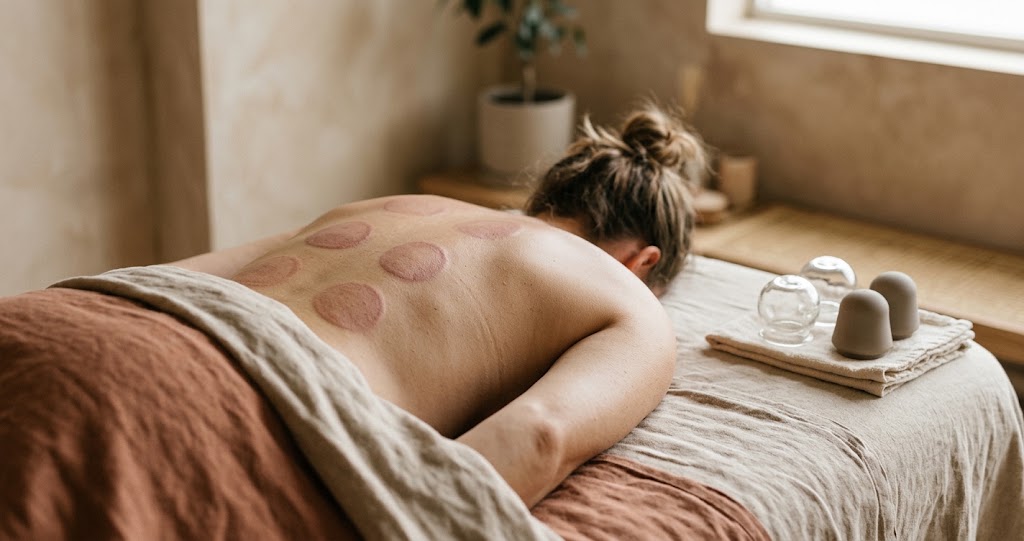
You have seen them: those round, colorful circles on an athlete’s shoulders or a friend’s back after a cupping session. And the first question almost everyone asks is the same. Are those bruises? Did something go wrong? What do the colors actually mean?
The short answer is that cupping marks are normal, expected, and not the same as a bruise from an injury. But there is a lot of misinformation about what the colors reveal, so let us give you a straight, honest explanation. In this guide, we will cover what the marks really are, what the colors traditionally mean (and what the evidence actually says), how long they last, and how to care for your skin afterward. At Inspire Movements in Colorado Springs, we use cupping therapy alongside ashiatsu every week, so we field these questions all the time.
What You’ll Learn in This Guide
- Whether cupping marks are actually bruises
- Why cupping leaves marks in the first place
- What the colors traditionally mean, and what the evidence says
- How long the marks last and how to care for your skin
- Who should be cautious, and how we use cupping here
- 1. Are Cupping Marks Bruises?
- 2. Why Cupping Leaves Marks
- 3. What the Colors Traditionally Mean
- 4. Do Darker Marks Mean It’s Working?
- 5. How Long Do Cupping Marks Last?
- 6. How to Care for Your Skin After Cupping
- 7. Who Should Be Cautious
- 8. How We Use Cupping at Inspire Movements
- 9. What the Evidence Says
- 10. Frequently Asked Questions
- 10.1 Do the marks hurt?
- 10.2 Can I exercise after cupping?
- 10.3 Does everyone get marks?
- 11. Cupping Therapy in Colorado Springs
Are Cupping Marks Bruises?
Not in the way you might think. A bruise from a bump or impact happens when tissue is crushed and blood vessels break under force. Cupping marks form differently: the suction gently pulls the skin and surface tissue upward, which draws a small amount of blood from tiny surface vessels into the surrounding tissue. Medically this is called ecchymosis. Notably, forensic studies of cupping have found no deep tissue damage beneath the marks, which is exactly what distinguishes them from an impact bruise. According to the NCCIH, the origin of these marks is worth understanding precisely so they are not mistaken for signs of injury.
Why Cupping Leaves Marks
The mark is simply the visible result of the suction. When the cup creates negative pressure, it lifts the skin and pulls blood toward the surface. In areas that are tight, congested, or less well circulated, more blood tends to surface, so the mark is darker. In areas with good circulation, the mark may be light or absent. The intensity also depends on how strong the suction is and how long the cups stay in place. In other words, the mark reflects the treatment and your individual skin and circulation, not the severity of any hidden problem.
What the Colors Traditionally Mean
In traditional practice, the color of a cupping mark is often interpreted as a sign of what is happening in the tissue. Here is how those colors are traditionally read:
| Mark Color | Traditional Interpretation |
|---|---|
| Light pink or light red | A well-circulated area, or a first or gentle session |
| Bright red | Recent tension or heat in the area |
| Dark red | Longer-standing tension |
| Dark purple | Chronic congestion or stagnation |
| Little to no mark | Good circulation, or lighter suction |
An honest note on the color chart
This color interpretation comes from tradition, not from modern clinical evidence. Cupping marks are not toxins leaving the body, and a darker mark does not prove a deeper problem or a more effective treatment. In reality, mark color is mostly driven by suction strength, how long the cups stay on, and your own skin and circulation. We share the traditional chart because people ask about it, but we do not use it to diagnose anything.
Do Darker Marks Mean It’s Working?
No. This is the most common myth about cupping. The darkness of a mark is not a measure of how well the session worked, nor a readout of toxins or stagnation. A light mark and a dark mark can both come from a beneficial session. What matters is how you feel afterward, whether your tension eased and your mobility improved, not the shade of the circles.
How Long Do Cupping Marks Last?
Cupping marks typically fade within about 1 to 10 days, with most gone in three to seven. Lighter marks disappear faster, and darker ones take a little longer. If a mark is still visibly there after two weeks, or if you have pain, blistering, or broken skin, contact your provider.
Curious About Cupping?
Book a cupping session at Inspire Movements and feel the difference for yourself. Located in Briargate, Colorado Springs.
How to Care for Your Skin After Cupping
- Hydrate well before and after your session
- Keep the area warm and covered for a few hours afterward
- Avoid intense heat right after (hot tubs, saunas, very hot showers)
- Skip strenuous exercise and alcohol for the rest of the day
- Be gentle with the skin and let the marks fade on their own
Who Should Be Cautious
Cupping is generally well tolerated, but it is not right for everyone. The NCCIH notes possible side effects including skin discoloration, and that cupping may worsen conditions like eczema or psoriasis. Let your therapist know if you take blood thinners, bruise very easily, have a skin condition, are pregnant, or have any medical concerns. At Inspire Movements we use dry cupping, the skin is never pierced, and we adjust the approach to your comfort and health history.
How We Use Cupping at Inspire Movements
We rarely use cupping on its own. More often, we pair it with ashiatsu massage: the cups help bring deeper tension toward the surface, so the massage that follows can accomplish more in the same amount of time. We go deeper on that combination in our post on why combining ashiatsu and cupping works better for low back pain, and you can learn the basics in what is cupping therapy.
What the Evidence Says
We believe in being straight about this. The NCCIH states that cupping may help reduce pain, but the evidence for this is not very strong, and it should be used as a complement to conventional care rather than a replacement. Some reviews indexed on PubMed suggest low-to-moderate-quality evidence that cupping may help with pain conditions like low back and neck pain. Many clients simply find it a comfortable, tension-easing addition to their massage, and that is a genuine benefit in itself.
Frequently Asked Questions
Do the marks hurt?
Usually not. The marks themselves are generally painless, though the area may feel slightly tender to the touch for a day or two, similar to a light workout.
Can I exercise after cupping?
Light movement is usually fine and can even feel good, but it is best to skip strenuous exercise for the rest of the day so your body can settle.
Does everyone get marks?
No. Some people mark easily and others barely at all, depending on skin, circulation, and the suction used. A faint mark does not mean the session was less effective.
Cupping Therapy in Colorado Springs
Cupping marks look dramatic, but now you know what they really are: a normal, temporary result of suction, not a bruise and not a toxin chart. At Inspire Movements, we serve clients throughout Briargate, Research Parkway, and the greater Colorado Springs area, using cupping thoughtfully alongside ashiatsu to help ease stubborn tension.
Want to Try Cupping for Yourself?
Book your session at Inspire Movements today and see how cupping and ashiatsu work together. Located in Briargate, Colorado Springs.