If you’ve seen Olympic athletes with circular marks on their backs or noticed friends posting about their cupping sessions, you’ve probably wondered what this ancient therapy actually does. Cupping therapy isn’t just a wellness trend. It’s a 3,000-year-old technique that’s been validated by modern practice for releasing stubborn fascial restrictions, improving circulation, and addressing chronic pain in ways that hands-on massage alone often can’t reach.
In this guide, we’ll walk through what cupping therapy actually is, the different types you might encounter, what conditions it can help, what the research says, and how we use cupping at Inspire Movements in Briargate, Colorado Springs. It’s often combined with ashiatsu massage for amplified results.
- 1 What You’ll Learn in This Guide
- 1. What Is Cupping Therapy?
- 2. Types of Cupping Therapy
- 2.1 Dry Cupping (Static)
- 2.2 Moving Cupping (Dynamic/Sliding)
- 2.3 Flash Cupping
- 2.4 Wet Cupping
- 3. How Cupping Therapy Works
- 3.1 Decompression of Tissue
- 3.2 Increased Blood Flow
- 3.3 Fascial Release
- 3.4 Nervous System Down-Regulation
- 4. What Conditions Does Cupping Treat?
- 4.1 Chronic Low Back Pain
- 4.2 Neck and Shoulder Pain
- 4.3 Sciatica and Hip Tension
- 4.4 IT Band Tightness
- 4.5 Athletic Recovery
- 4.6 Headaches and Upper Back Tension
- 4.7 Stress and General Tension
- 4.8 Curious if Cupping Is Right for You?
- 5. What the Research Says About Cupping
- 6. Why Combine Cupping With Massage?
- 7. What to Expect During a Cupping Session
- 7.1 Intake Conversation
- 7.2 The Cup Application
- 7.3 During the Session
- 7.4 After the Session
- 8. Cupping vs. Other Therapies
- 9. About the Marks: What They Mean
- 10. Who Should Avoid Cupping?
- 11. How Often Should You Get Cupping?
- 12. Experience Cupping Therapy in Briargate, Colorado Springs
- 12.1 Ready to Try Cupping?
What You’ll Learn in This Guide
- What cupping therapy is and how it works
- The different types of cupping and which ones we use
- Conditions cupping is most effective for
- What the research says about cupping therapy
- Why combining cupping with massage works better than either alone
- What to expect during a cupping session
- Who should and shouldn’t get cupping therapy
What Is Cupping Therapy?
Cupping therapy is a hands-on technique where specially designed cups are placed on the skin to create suction. The negative pressure pulls the skin and underlying tissues upward into the cup, which produces effects that are essentially the opposite of traditional massage. Instead of pressing tissue down and compressing it, cupping lifts and decompresses it.
This decompression releases fascial adhesions, increases blood flow to the area, and creates space in tissues that have been chronically tight. The result is often a feeling of release that hands-on pressure can’t quite achieve, especially in stubborn areas like the upper back, lower back, IT bands, and the muscles surrounding the shoulder blades.
Cupping has been practiced for thousands of years across multiple cultures, from ancient Egypt and China to traditional Middle Eastern medicine. Today, it’s gained mainstream recognition in physical therapy, sports medicine, and integrative wellness practices like ours.
Types of Cupping Therapy
Not all cupping is the same. Here are the main types you might encounter:
Dry Cupping (Static)
The most common type used in modern wellness practices. Cups are placed on specific points and left in place for 5-15 minutes to allow sustained decompression. This is the form we use most often at Inspire Movements because it’s gentle, effective, and predictable.
Moving Cupping (Dynamic/Sliding)
After applying oil to the skin, the practitioner glides the cups across muscle groups while maintaining suction. This is fantastic for working the broader fascial sheets along the back, glutes, and IT bands. It’s a favorite for athletes and active clients.
Flash Cupping
Cups are quickly applied and released in rapid succession across an area to stimulate blood flow without leaving the characteristic marks. Useful for warming up tissues before deeper work.
Wet Cupping
A traditional medical practice that involves making small incisions in the skin before applying cups to draw a small amount of blood. We do not perform wet cupping at Inspire Movements. It’s a medical procedure that requires specialized licensure and isn’t part of our wellness-focused practice.
How Cupping Therapy Works
The mechanism is straightforward but surprisingly powerful. Here’s what’s happening when cups are applied:
Decompression of Tissue
Most massage techniques work by compressing tissue downward. Cupping does the opposite. It lifts and separates layers of skin, fascia, and muscle. This decompression can release adhesions (sticky spots where tissues have been bound together) that traditional massage simply can’t reach. For clients with chronic tightness that hasn’t responded to deep tissue work, this is often the breakthrough modality.
Increased Blood Flow
The suction draws fresh blood into the treatment area, bringing oxygen and nutrients to tissues that have been chronically restricted. This increased circulation is what produces the temporary discoloration (“cup marks”). They’re not bruises in the traditional sense, but rather a visible sign of stagnant blood being mobilized and brought to the surface to be cleared by the body.
Fascial Release
Fascia, the connective tissue web that surrounds and weaves through every muscle in your body, can become bound up, dehydrated, and restricted from injury, posture, or chronic tension. Cupping is one of the most effective ways to free fascial restrictions, and many clients report feeling “looser” in ways that didn’t happen with massage alone.
Nervous System Down-Regulation
The sustained, gentle pressure of cupping is deeply calming to the nervous system. Many clients describe a similar parasympathetic response to what they feel during massage: slowed breathing, deeper relaxation, and a release of accumulated tension that goes beyond the muscles themselves.
What Conditions Does Cupping Treat?
Cupping is most effective for musculoskeletal and soft-tissue conditions. Here are the issues we see it help most often at our Briargate practice:
Chronic Low Back Pain
Cupping along the lumbar region, glutes, and hamstrings releases the fascial restrictions that contribute to chronic low back pain. We frequently combine cupping with ashiatsu for clients whose pain hasn’t fully resolved with massage alone. See our breakdown on why combined ashiatsu and cupping works better for low back pain.
Neck and Shoulder Pain
A 2016 randomized controlled trial published in PubMed found that even a single cupping treatment significantly reduced neck and shoulder pain intensity in participants suffering from work-related chronic pain. For desk workers, drivers, and anyone with stubborn shoulder tension, cupping is one of the fastest ways to find relief.
Sciatica and Hip Tension
The piriformis muscle, glutes, and outer hip are common contributors to sciatica pain. Cupping these areas can release the fascial pressure on the sciatic nerve and provide relief that’s difficult to achieve any other way.
IT Band Tightness
Runners, cyclists, and hikers know how stubborn the iliotibial band can be. Moving cupping along the IT band is one of the most effective ways to release this tissue without the painful direct pressure that other techniques require.
Athletic Recovery
For active clients in Colorado Springs, like runners on the Front Range, weekend hikers tackling 14ers, cyclists, and gym-goers, cupping helps speed recovery between training sessions by clearing metabolic waste, restoring circulation, and reducing soreness.
Headaches and Upper Back Tension
Cupping along the upper trapezius, rhomboids, and levator scapulae can release the chronic upper-body tightness that drives many tension headaches. For migraine clients, cupping as a regular preventive treatment can reduce frequency over time.
Stress and General Tension
Even without a specific pain complaint, many clients use cupping as part of a stress management routine. The deep relaxation and nervous system reset often outweighs the modest physical discomfort of the suction.
Curious if Cupping Is Right for You?
Book a session with Jessica at Inspire Movements and find out.
What the Research Says About Cupping
Cupping has gained increasing research attention as it’s become more mainstream. The National Center for Complementary and Integrative Health notes that while cupping appears to have promising effects for pain management, more high-quality research is still needed to fully understand its mechanisms and to draw firm conclusions about its effectiveness for specific conditions.
A 2021 evidence map published in PubMed reviewed 13 systematic reviews of cupping research and found potential benefits for conditions including low back pain, neck pain, knee osteoarthritis, migraine, and other musculoskeletal issues. Multiple smaller studies have shown short-term improvements in pain intensity and range of motion after cupping sessions, especially for chronic neck and shoulder pain.
It’s worth being honest about what the research shows: cupping appears to provide real benefits for many people, particularly for pain conditions, but the strength of the evidence varies. Some studies show clear effects, while others show benefits indistinguishable from placebo. What the research does consistently show is that cupping is a low-risk modality when performed by a trained practitioner.
Our experience aligns with the research: cupping isn’t a magic bullet, but for the right conditions and the right clients, it produces real, measurable improvement, especially when integrated with other modalities like ashiatsu massage.
Why Combine Cupping With Massage?
At Inspire Movements, we rarely use cupping in isolation. The reason is simple: cupping and massage work on tissue from opposite directions, and combining them produces results that neither modality delivers alone.
Massage compresses tissue downward, releases muscle tension, and improves circulation through pressure. Cupping decompresses tissue upward, releases fascial adhesions, and improves circulation through suction. Used together, you get a comprehensive release that addresses all the layers of dysfunction at once.
For most clients with chronic pain, our typical approach is to use ashiatsu massage as the foundation and add cupping during the same session for problem areas: the lower back, between the shoulder blades, the glutes, or wherever traditional massage hasn’t fully resolved tension. Read more about this approach in our deep dive on how we use cupping therapy and ashiatsu massage to help clients.
What to Expect During a Cupping Session
If you’ve never had cupping before, here’s what to expect:
Intake Conversation
Jessica will ask about your pain history, current concerns, any medications, and your skin sensitivity. Cupping isn’t appropriate for everyone, so this conversation is essential for tailoring the session safely.
The Cup Application
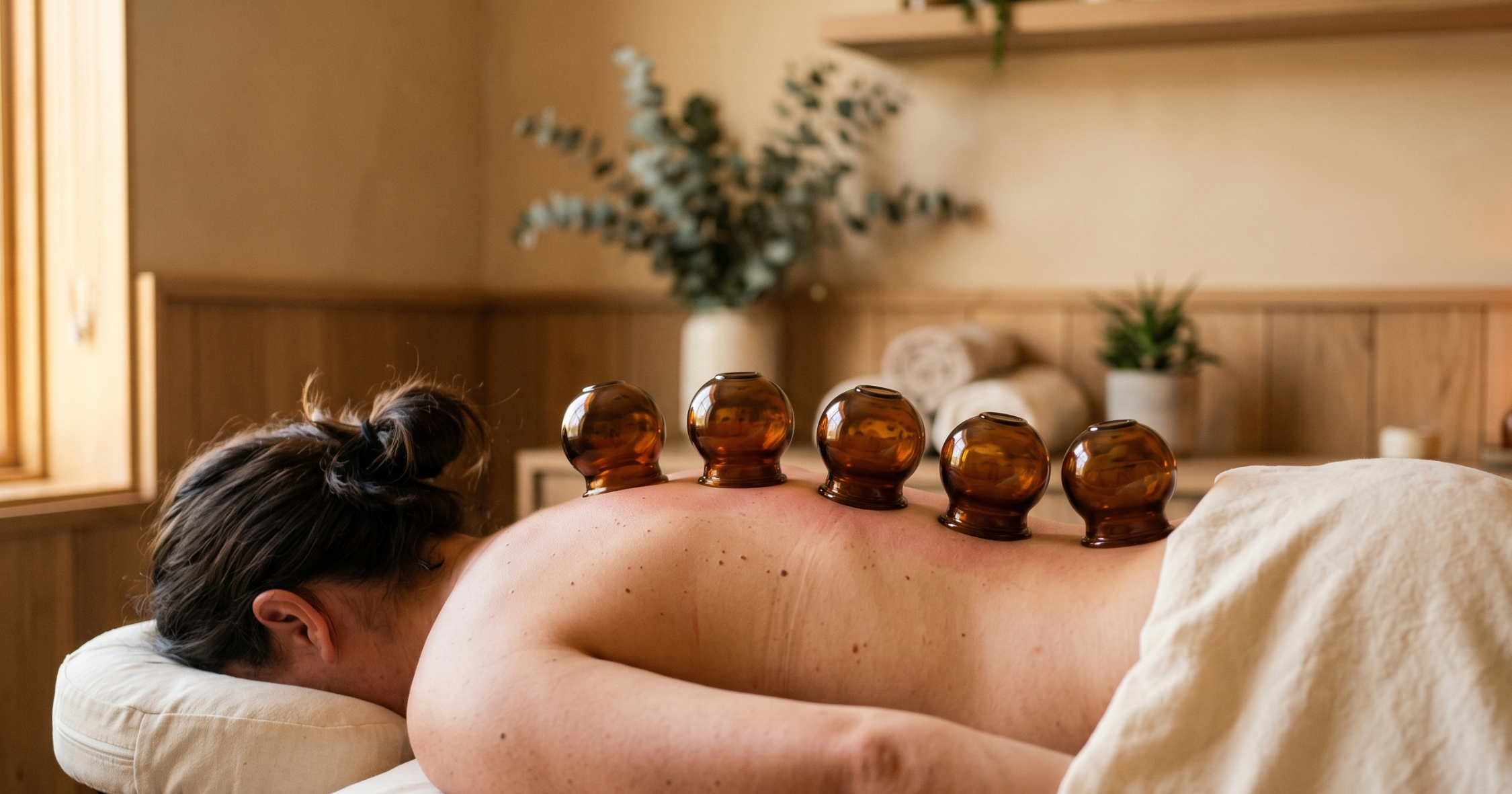
After identifying treatment areas, the cups are applied, either using a small hand pump (silicone cups) or by warming the air inside (glass cups). The suction is adjustable; you should feel a firm pulling sensation but never sharp pain. Most people describe it as an unusual but pleasant feeling.
During the Session
Cups are typically left in place for 5-15 minutes for static cupping, or moved across muscles with oil for moving cupping. Many clients fall asleep or enter a deeply relaxed state during this time. Sessions usually last 30-60 minutes total when combined with massage.
After the Session
You’ll likely have circular discoloration in the treated areas. These are not bruises but rather a visible sign of mobilized blood and lymph. They typically last 3-7 days and fade naturally. They’re not painful and don’t restrict movement.
Most clients feel noticeably looser, lighter, and more relaxed immediately after a cupping session. Drink plenty of water, take it easy on heavy exercise for 24 hours, and pay attention to how your body feels over the following days. Many people report cumulative improvement that builds session over session.
Cupping vs. Other Therapies
If you’re trying to decide which modality is right for you, here’s how cupping compares to other common approaches:
| Therapy | Mechanism | Best For | Visible Marks? |
|---|---|---|---|
| Cupping | Decompression / suction | Fascial restrictions, stubborn tightness | Yes, 3-7 days |
| Massage | Compression / pressure | Muscle tension, relaxation | No |
| Foam rolling | Self-applied compression | Maintenance, mild tension | No |
| Dry needling | Trigger point release | Specific muscle knots | Minor pinpoints |
| Red light therapy | Cellular healing | Inflammation, recovery | No |
About the Marks: What They Mean
The circular discoloration left by cupping is the most asked-about aspect of the therapy. Here’s what you should know:
- They’re not bruises. Bruises happen from blunt force trauma rupturing capillaries. Cupping marks are caused by suction drawing stagnant blood and metabolic waste to the surface, where they can be cleared by the lymphatic system.
- Color reflects tissue condition. Light pink marks usually mean healthy circulation in the area. Dark red or purple marks often indicate areas with chronic stagnation or restriction.
- They fade naturally. Most marks fade within 3-7 days, though deeper marks can last up to two weeks.
- They’re not painful. Unlike bruises, cupping marks don’t typically feel tender or restrict movement.
- They lessen over time. With regular cupping, marks typically become lighter and fade faster as circulation improves in the treated areas.
The NCCIH does note that the marks should be explained to other healthcare providers if you’re seen for an unrelated medical issue, so they aren’t mistaken for signs of injury or abuse.
Who Should Avoid Cupping?
Cupping is generally safe, but it’s not appropriate for everyone. According to the NCCIH, cupping should be avoided or modified for people with:
- Bleeding disorders or those taking blood thinners
- Severe skin conditions like eczema or psoriasis flare-ups in the treatment area
- Open wounds, sunburns, or active skin infections
- Pregnancy (cupping should be modified or avoided depending on stage)
- Severe varicose veins in the treatment area
- Recent surgery or trauma in the area
- Severe heart conditions or uncontrolled high blood pressure
If any of these apply to you, mention them during your intake conversation. We can adjust the session or recommend an alternative modality that better fits your situation.
How Often Should You Get Cupping?
Frequency depends on your goals. Here’s how we typically structure cupping into a care plan:
| Goal | Recommended Frequency | Typical Format |
|---|---|---|
| Acute pain relief | Weekly for 3-4 weeks | Combined with massage |
| Chronic tension | Bi-weekly | Combined with ashiatsu |
| Athletic recovery | After hard training sessions | Moving cupping focus |
| Maintenance | Monthly | Add-on to massage |
| First-time client | Single session to assess response | Brief, gentle suction |
Experience Cupping Therapy in Briargate, Colorado Springs
Cupping therapy is one of our most popular add-ons at Inspire Movements, and for good reason. It consistently delivers results for clients who’ve hit a wall with traditional massage alone. Whether you’re an athlete looking for faster recovery, a desk worker dealing with stubborn shoulder tension, or someone managing chronic pain that other therapies haven’t fully resolved, cupping can be a game-changer when used thoughtfully and combined with the right modalities.
We serve clients throughout Briargate, Research Parkway, Academy Boulevard, and the I-25 corridor in Colorado Springs. Jessica’s training in cupping, ashiatsu, and integrative pain therapy means every session is designed around your specific needs, not a one-size-fits-all approach.
If you’ve been curious about cupping, or if you’ve tried massage and need something that goes deeper into the fascial layer, we’d love to introduce you to it.
Ready to Try Cupping?
Book a session with Jessica at Inspire Movements and experience cupping therapy combined with ashiatsu massage for a deeper level of release. Located in Briargate, Colorado Springs.